One of the most appealing and visited architectural gems is the endlessly fascinating Villa Palagonia, located in the town of Bagheria, 15km from the capital of Sicily, Palermo. Left in a dilapidated state, it is open to the public to be visited and while not all of it is currently accessible, it is nonetheless hauntingly beautiful and intriguing. If you have found a villa in Sicily or vacation rental in Palermo and you are interested in the island's rich and unique architectural and cultural heritage, then this is definitely a must-see to pencil in during your vacation in Italy.
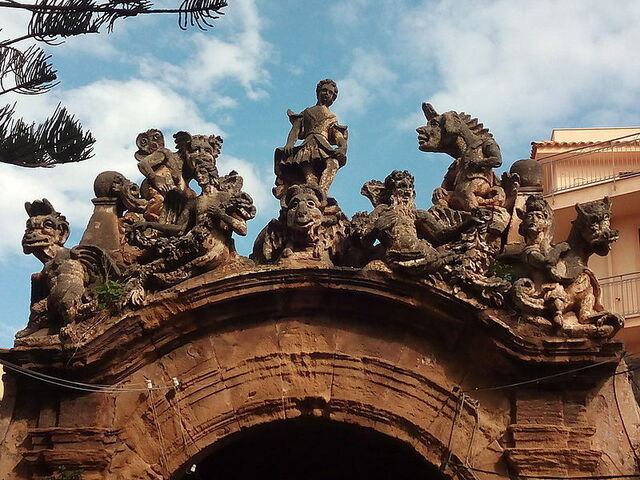
Famous for the monstrous statues that decorate the garden, the so-called Villa dei Mostri (or Villa of the Monsters) was built in the 18th century according to the designs of Tommaso Napoli with the help of Agatino Daidone. An early example of the unique and richly intriguing Sicilian Baroque, the Villa Palagonia first gained international interest and attention when Grand Tour travellers exploring the area began to record and write of it and the series of grotesques on the grounds, in particular, in the 18th and 19th centuries. The likes of Henry Swinburne, Patrick Brydone, John Soane, Goethe, the Count de Borde, artists such as Jean-Pierre Houël or Alexandre Dumas, surrealists like André Breton, contemporary authors such as Giovanni Macchia and Dominique Fernandez, and more are all known to have noted, been inspired by, and reported about the villa.
Famous for the monstrous statues that decorate the garden, the so-called Villa dei Mostri (or Villa of the Monsters) was built in the 18th century according to the designs of Tommaso Napoli with the help of Agatino Daidone. An early example of the unique and richly intriguing Sicilian Baroque, the Villa Palagonia first gained international interest and attention when Grand Tour travellers exploring the area began to record and write of it and the series of grotesques on the grounds, in particular, in the 18th and 19th centuries. The likes of Henry Swinburne, Patrick Brydone, John Soane, Goethe, the Count de Borde, artists such as Jean-Pierre Houël or Alexandre Dumas, surrealists like André Breton, contemporary authors such as Giovanni Macchia and Dominique Fernandez, and more are all known to have noted, been inspired by, and reported about the villa.
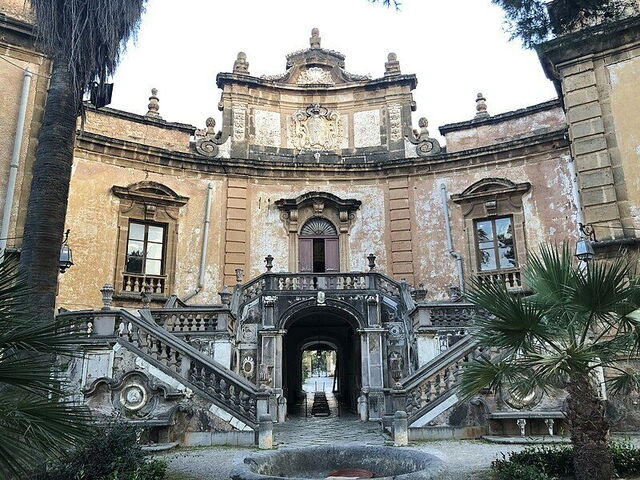
Built for Ferdinando Francesco I Gravina Cruyllas, prince of Palagonia, by the architect and Dominican friar Tommaso Maria Napoli from 1715 onwards, the low structures around the villa were then continued under Daidone, and then internal and external decorations were then commissioned in 1749 by the prince's successors. The most famous of these was the homonymous nephew Ferdinando Francesco II, known as The Necromancer (1722-1788), under whom the well-known and well-loved monstrous figures were created. Carved out of tufacea d'Aspra stone, these statues depict anthropomorphic figures including dames and knights, caricatures, fantastical beasts, animals and more, who stand atop walls, archways, and line the walkway, and the triumphal arch-like entry gate.
Of the 200 sculptural figures that once existed, created according to a well-planned and symmetrical scheme, 62 remain today and one can only imagine just how striking and frightening they must have been to earlier viewers. The well-known poet Johann Wolfgang von Goethe, one of the famous visitors to the palace during the years of the Grand Tour trips, described its bizarre and wonderful exterior in his Journey of Italy in 1787 thusly: “To convey all the elements of the madness of the Prince of Palagonia, here is the list. Men: beggars of both sexes, Spaniards, Moors, Turks, hunchbacks, deformed men of all kinds, dwarves, musicians, puffins, old-fashioned soldiers, gods and goddesses, ancient French costumes, soldiers with giblets and gloves, mythological with comic additions (...) Beasts: isolated parts of the same, horses with human hands, human bodies with equine heads, deformed monkeys, numerous dragons and snakes, very varied paws and figures of all kinds, splitting and exchanging heads. Vases: all the varieties of monsters and cones ending in bellies of vases and pedestals. Imagine such figures galore, without sense and without reason, put together without choice or discernment, imagine these clogs and pedestals and deformities aligned as far as the eye can see: and you will experience the painful feeling that oppresses those who find themselves passing under the rods from this madness.”
Of the 200 sculptural figures that once existed, created according to a well-planned and symmetrical scheme, 62 remain today and one can only imagine just how striking and frightening they must have been to earlier viewers. The well-known poet Johann Wolfgang von Goethe, one of the famous visitors to the palace during the years of the Grand Tour trips, described its bizarre and wonderful exterior in his Journey of Italy in 1787 thusly: “To convey all the elements of the madness of the Prince of Palagonia, here is the list. Men: beggars of both sexes, Spaniards, Moors, Turks, hunchbacks, deformed men of all kinds, dwarves, musicians, puffins, old-fashioned soldiers, gods and goddesses, ancient French costumes, soldiers with giblets and gloves, mythological with comic additions (...) Beasts: isolated parts of the same, horses with human hands, human bodies with equine heads, deformed monkeys, numerous dragons and snakes, very varied paws and figures of all kinds, splitting and exchanging heads. Vases: all the varieties of monsters and cones ending in bellies of vases and pedestals. Imagine such figures galore, without sense and without reason, put together without choice or discernment, imagine these clogs and pedestals and deformities aligned as far as the eye can see: and you will experience the painful feeling that oppresses those who find themselves passing under the rods from this madness.”
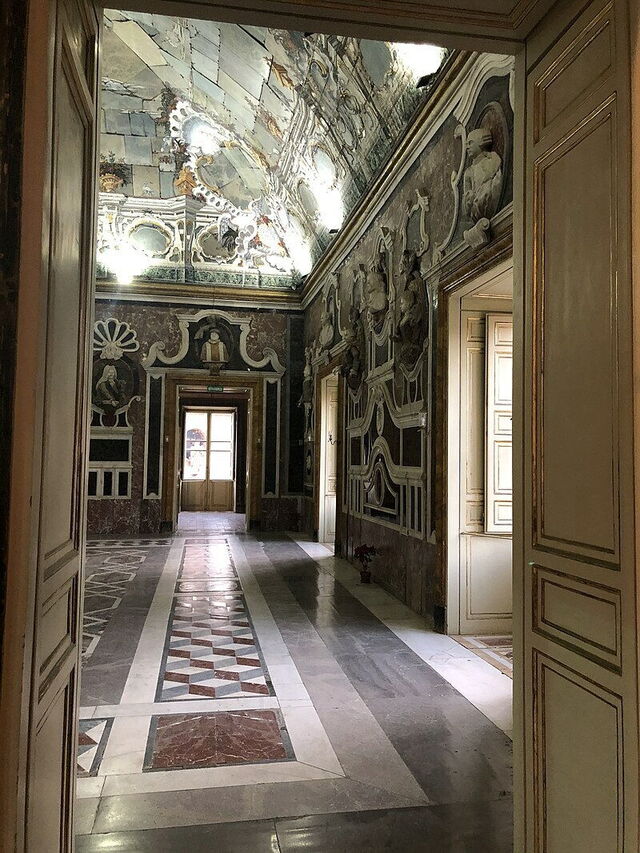
Once the family line of the princes ultimately died out, the villa was then bought by the Castronovo family in 1885, who still own it to this day. As noted, the villa is partially open to the public with the exterior and its famous statuary readily viewed and some internal rooms available to visitors. All are without furniture but retain their original wall decorations. The Gallery of Mirrors is particularly noteworthy, with its astounding ceiling of antique mirrors, the corners of which are painted over with majestic birds and coats of arms. Villa Palagonia is a particularly magical place to visit when it hosts concerts as one of the venues of the Concert Season of Bagheria (Stagione Concertistica Città di Bagheria). Having joined the initiative in 2017, this program allows clever travellers and guests to snag free tickets to musical performances in this fascinating building.
So, if you have found a villa in Sicily and want to see one of the most awe-inspiring and unusual architectural gems in all of Italy then be sure to plan a trip to the fascinating Villa Palagonia.
So, if you have found a villa in Sicily and want to see one of the most awe-inspiring and unusual architectural gems in all of Italy then be sure to plan a trip to the fascinating Villa Palagonia.
Photo credits:
Picture 1: Lasterketak / CC BY-SA 4.0;
Picture 2: Davide Mauro / CC BY-SA 4.0;
Picture 3: Davide Mauro / CC BY-SA 4.0
Picture 1: Lasterketak / CC BY-SA 4.0;
Picture 2: Davide Mauro / CC BY-SA 4.0;
Picture 3: Davide Mauro / CC BY-SA 4.0