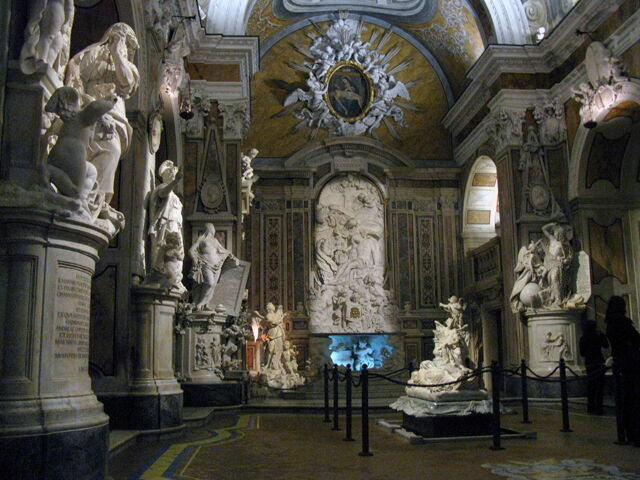
If you have found a vacation rental in Naples, there is one museum in the city that you really cannot afford to miss. The Cappella Sansevero, or the Cappella Sansevero de' Sangri or Pietatella, is a chapel located on Via Francesco de Sanctis 19, in the historic center of the city that is home to incredible works of art by some of the leading Italian artists of the 18th century. It is a source of pride of Naples and is stuffed to the gills with some of the most beautiful art pieces and objects that one could ever expect to lay eyes upon. Both church and museum, this little gem is a true reflection of the heritage of extraordinary works of religious art in Italy.
Dating back to 1590, the chapel was originally built by John Francesco di Sangro, Duke of Torremaggiore, as he recovered from a serious illness as a private chapel in the gardens of Palazzo Sansevero, the family's noble residence. It later became a family burial chapel and was connected to the palace until 1888.
Today, the Cappella Sansevero is a public building and home to incredible masterpieces like the famous Veiled Christ, which is famous for the extraordinary tissue-like quality of the marble. Created by Giuseppe Sanmartino in 1753, who was a young relatively unknown Neapolitan artist at the time, it is now the most famous piece and the focal point of the collection, located at the centre of the nave of the chapel. Intensely realistic and emotional, it dramatically evokes the reality of the dead Christ's suffering and body; showcasing a swollen vein still pulsating on the forehead and wounds from the nails of Crucifixion on the hands and feet.
Dating back to 1590, the chapel was originally built by John Francesco di Sangro, Duke of Torremaggiore, as he recovered from a serious illness as a private chapel in the gardens of Palazzo Sansevero, the family's noble residence. It later became a family burial chapel and was connected to the palace until 1888.
Today, the Cappella Sansevero is a public building and home to incredible masterpieces like the famous Veiled Christ, which is famous for the extraordinary tissue-like quality of the marble. Created by Giuseppe Sanmartino in 1753, who was a young relatively unknown Neapolitan artist at the time, it is now the most famous piece and the focal point of the collection, located at the centre of the nave of the chapel. Intensely realistic and emotional, it dramatically evokes the reality of the dead Christ's suffering and body; showcasing a swollen vein still pulsating on the forehead and wounds from the nails of Crucifixion on the hands and feet.
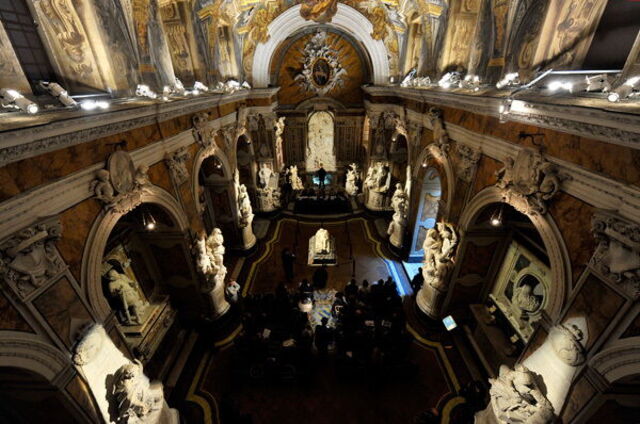
Another highlight is Divine Love, a work attributed to Francesco Queirolo and created in the second half of the eighteenth century. Dedicated to Giovanna di Sangro of the Marquises of San Lucido, wife of the fifth Prince of Sansevero, Giovan Francesco di Sangro, it depicts a young figure wrapped in a cloak that is holding a flaming heart in his right hand and looking up to the sky, a symbol of Giovanna's love of God. Equally celebrated is the 1753-54 work, Disillusion, by Francesco Queirolo. His masterpiece, it was dedicated by Raimondo di Sangro to his father Antonio, Duke of Torremaggiore and is a sculptural group that tells the tale of a man who has been set free from sin, freed from a net with the help of little winged spirit, with a small flame on his forehead, which is a symbol of human intellect. The subject was unique and Raimondo’s own clever invention, which is much acclaimed.
Antonio Corradini's 1752 work, Modesty, along with the Veiled Christ and Disillusion, makes up the triad of excellence in the Sansevero Chapel. The Venetian Antonio Corradini was very famous at the time and had been in the service of Emperor Charles V of Vienna. It is another virtuoso veiled figure that depicts an idealised nude female figure draped in a veil and was commissioned to commemorate Cecilia Gaetani and as an allegory of Wisdom. Corradini'a Decorum, a work made between 1751 and 1752 and dedicated to the first and second wives of Giovan Francesco di Sangro, Prince of Sansevero is less somewhat less acclaimed and clearly less refined. It celebrates the quality that the two shared, one that was very useful in court life: decorum. The other well-known works in the chapel include Francesco Celebrano's 1767 piece Self-control, Francesco Queirolo's Education from 1753, his Liberality from 1753-54, and his Sincerity from 1754-55, Paolo Persico's Sweetness of the Marital Yoke of 1768, and Religious Zeal from 1767 by Fortunato Onelli and Francesco Celebrano et al.
In an underground chamber beneath the Sansevero Chapel are famous anatomical studies in two glass cases: the skeletons of a man and a woman in upright position with their arteriovenous system almost perfectly intact. Made by Palermo doctor Giuseppe Salerno, these grim figures are steeped in myth and confusion with how the excellent preservation was achieved remaining a mystery and stories about the figures being servants that were killed to make the objects. The rest of the building, especially around the high altar, is stuffed with fascinating objects and stunning works of art and the chapel itself is a great beauty. It is absolutely a must-see for art-lovers renting a villa in Naples and exploring this part of Italy.
Antonio Corradini's 1752 work, Modesty, along with the Veiled Christ and Disillusion, makes up the triad of excellence in the Sansevero Chapel. The Venetian Antonio Corradini was very famous at the time and had been in the service of Emperor Charles V of Vienna. It is another virtuoso veiled figure that depicts an idealised nude female figure draped in a veil and was commissioned to commemorate Cecilia Gaetani and as an allegory of Wisdom. Corradini'a Decorum, a work made between 1751 and 1752 and dedicated to the first and second wives of Giovan Francesco di Sangro, Prince of Sansevero is less somewhat less acclaimed and clearly less refined. It celebrates the quality that the two shared, one that was very useful in court life: decorum. The other well-known works in the chapel include Francesco Celebrano's 1767 piece Self-control, Francesco Queirolo's Education from 1753, his Liberality from 1753-54, and his Sincerity from 1754-55, Paolo Persico's Sweetness of the Marital Yoke of 1768, and Religious Zeal from 1767 by Fortunato Onelli and Francesco Celebrano et al.
In an underground chamber beneath the Sansevero Chapel are famous anatomical studies in two glass cases: the skeletons of a man and a woman in upright position with their arteriovenous system almost perfectly intact. Made by Palermo doctor Giuseppe Salerno, these grim figures are steeped in myth and confusion with how the excellent preservation was achieved remaining a mystery and stories about the figures being servants that were killed to make the objects. The rest of the building, especially around the high altar, is stuffed with fascinating objects and stunning works of art and the chapel itself is a great beauty. It is absolutely a must-see for art-lovers renting a villa in Naples and exploring this part of Italy.
Photo credits
Picture 1: David Sivyer / CC BY-SA 2.0;
Picture 2: David Sivyer / CC BY-SA 2.0
Picture 1: David Sivyer / CC BY-SA 2.0;
Picture 2: David Sivyer / CC BY-SA 2.0