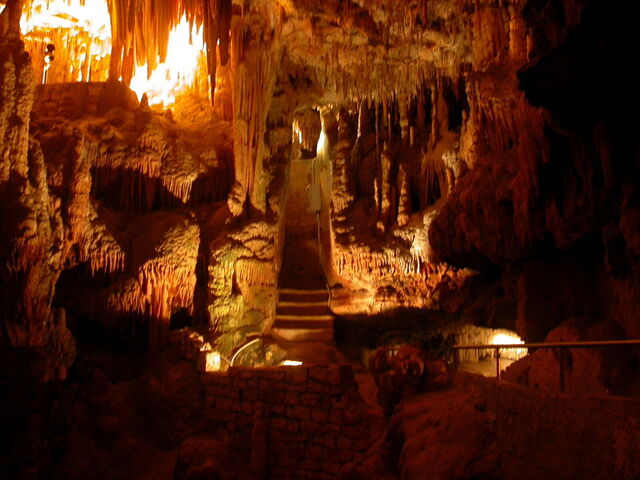
If you have found a vacation rental in Apulia and you are looking for things to see and do in the area, a quick internet search will immediately list the fantastic Castellana Caves (Grotte di Castellana) are one of the most important attractions in all of Apulia. This system of caves is one of the largest in Italy and stretches underground up to 60m deep for over 3km. The karst rock formations are complex, varied, and dazzling and so otherworldly-looking that you would be forgiven for mistaking it for a place on another planet entirely. Offering a unique and rather extraordinary experience, the caves should be seen with one’s own eyes and are a must for those spending time in the region of Apulia.
The cave system was discovered in 1938 by the speleologist Franco Anelli, a kilometre south of the town of Castellana – now usually referred to as Castellana Grotte, referencing the presence of the caves – after the Provincial Tourist Board of Bari asked the Italian Institute of Speleology of Postojna for a speleologist to inspect some caves in the area. They hoped that some of the local caves could be made into a tourist attraction but all of them had been already explored and were thought to be unsuitable due to their limited extension.
The cave system was discovered in 1938 by the speleologist Franco Anelli, a kilometre south of the town of Castellana – now usually referred to as Castellana Grotte, referencing the presence of the caves – after the Provincial Tourist Board of Bari asked the Italian Institute of Speleology of Postojna for a speleologist to inspect some caves in the area. They hoped that some of the local caves could be made into a tourist attraction but all of them had been already explored and were thought to be unsuitable due to their limited extension.
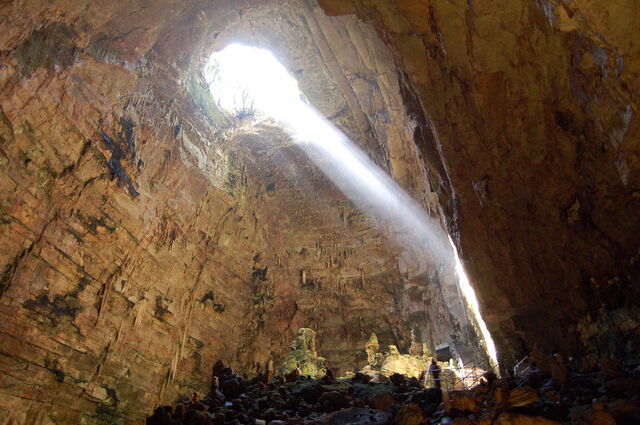
This all changed, however, when Anelli went to the La Grave site, which was filled with waste materials that had accumulated over the years. After making his way to the ground, past the waste, he disappeared into a corridor in the rock and found a passage half-hidden by stalactites and stalagmites that lead to a huge cave, which was later called the "Cave of the Monuments". He was unprepared by the scale of the caves, which could not be lit up adequately by his acetylene lamp and had to return for further exploration with a local named Vito Matarrese two days later. They got 300m in before having to stop in front of a deep abyss, now known as the Snake Corridor. Again, he came back with the same man two months later and tried once more, getting 600m from the first cave. He spent several days in the area and made the first survey of the caves. When he left, Matarrese was made responsible for the exploration of the caves and eventually climbed over the precipice of the Desert Corridor and discovered the last cave, the White Cave, in 1940.
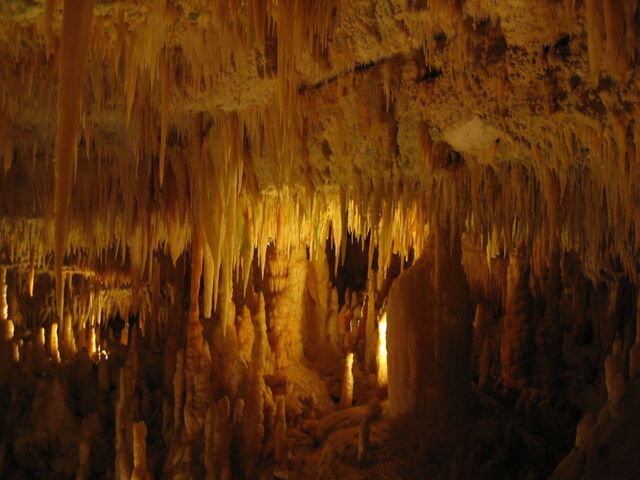
We now know that the cave system of Grotte di Castellana probably originated about a hundred million years ago and was likely formed when the land that is now Apulia was first emerging from the sea and the overly rigid new land became fractured. Water infiltrated the soil and then even larger cavities were created. This formed the incredible and diverse cave system that exists in Castellana today. While there are all sorts of inventively named and fascinating segments and parts to explore, the caves can be loosely divided into two main areas: La Grave, a natural pantheon with an opening in the roof that allows sunlight to enter and move around the space as the day passes; and the White Cave, which is made of white alabaster and a natural cathedral of crystals, stalagmites, and an eccentric array of stalactites that are sometimes horizontal or curved.
We now know that the cave system of Grotte di Castellana probably originated about a hundred million years ago and was likely formed when the land that is now Apulia was first emerging from the sea and the overly rigid new land became fractured. Water infiltrated the soil and then even larger cavities were created. This formed the incredible and diverse cave system that exists in Castellana today. While there are all sorts of inventively named and fascinating segments and parts to explore, the caves can be loosely divided into two main areas: La Grave, a natural pantheon with an opening in the roof that allows sunlight to enter and move around the space as the day passes; and the White Cave, which is made of white alabaster and a natural cathedral of crystals, stalagmites, and an eccentric array of stalactites that are sometimes horizontal or curved.
Open year-round (except for Christmas Day and New Year’s Day), the caves are now a major tourist attraction and there are guided tours offered in English and Italian, with special night tours offered in the summertime. There are two main itineraries, one that is a kilometre long and lasts around 50 minutes and another that is 3km long and lasts around 2 hours. If you’re interested in learning more after that, there is also a Speleological Museum of the Caves of Castellana dedicated to Anelli that was inaugurated on the 23rd of January 2000, on the occasion of the 62nd anniversary of the discovery of the caves.
If you are planning on finding a vacation rental in Apulia and spending time exploring the region, why not see the incredible natural bounty hidden underneath the surface in this amazing part of Italy.
If you are planning on finding a vacation rental in Apulia and spending time exploring the region, why not see the incredible natural bounty hidden underneath the surface in this amazing part of Italy.
Photo credits:
Picture 2: Michael Paraskevas / CC BY-SA 3.0;
Picture 2: Michael Paraskevas / CC BY-SA 3.0;