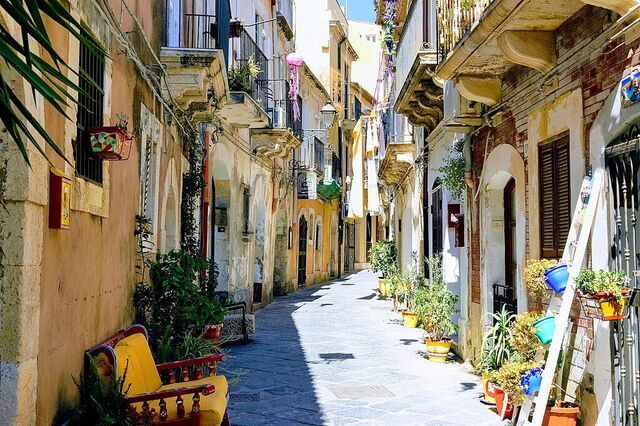
Syracuse is one of the oldest and most influential cities in the Mediterranean and began as the small island of Ortygia when the Greek Corinthians settled the area around 734 BC. Ortygia then grew outwards and developed into the much larger city of Syracuse over the centuries. The small island remains today as its historic heart and soul and a reminder of its origins. Designated as a UNESCO World Heritage Site in 2005, it is easy to see why it has captured the hearts of so many as it is an utterly picturesque gem; surrounded by the impossibly blue waters of the Ionian Sea, it stretches out into the water as a walled diamond of winding little streets and glittering white buildings.
Wandering the labyrinthine ancient streets is a joy in of itself and getting a little lost (you can't really get lost as a few minutes walk in any direction will get you back to a main street) is half the fun but there are plenty of little delights that you can stumble upon around the district. Among them is the incredible Cathedral of Syracuse that is built on a site dating back to the 5th century BC and which was an ancient Temple of Athena. The Greek Doric columns of the temple are still visible inside the church today.
Wandering the labyrinthine ancient streets is a joy in of itself and getting a little lost (you can't really get lost as a few minutes walk in any direction will get you back to a main street) is half the fun but there are plenty of little delights that you can stumble upon around the district. Among them is the incredible Cathedral of Syracuse that is built on a site dating back to the 5th century BC and which was an ancient Temple of Athena. The Greek Doric columns of the temple are still visible inside the church today.
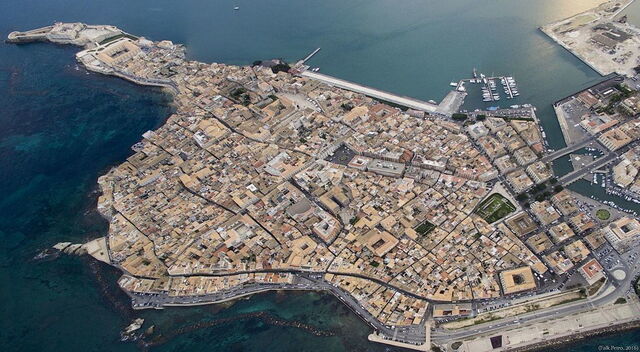
Speaking of temples, the Temple of Apollo is also located in Ortygia and is the oldest Doric temple in Sicily, dating back to the 6th century BC. Converted to a Byzantine church, then to a Muslim mosque, and then a church again under Norman control, it stands in ruins today. The main attraction is the Greek theatre, which dates back to at least the 5th century BC, accommodated up to 15,000 spectators and is still used for an annual Greek theatre festival that takes from the middle of May to the end of June, though there is also a Roman theatre.
Another, more in tact and lovely architectural gem, is the Fountain of Arethusa. Located in a sunken artesian pond that flows to the sea that is home to a bunch of ducks, it is surrounded by a variety of cafes and is a perfect place to unwind during your exploration of the island. Those who arrive to the island early in the day will be treated with the outdoor street market that is well-stocked with the freshest of produce, fruits and seafood.
Another, more in tact and lovely architectural gem, is the Fountain of Arethusa. Located in a sunken artesian pond that flows to the sea that is home to a bunch of ducks, it is surrounded by a variety of cafes and is a perfect place to unwind during your exploration of the island. Those who arrive to the island early in the day will be treated with the outdoor street market that is well-stocked with the freshest of produce, fruits and seafood.
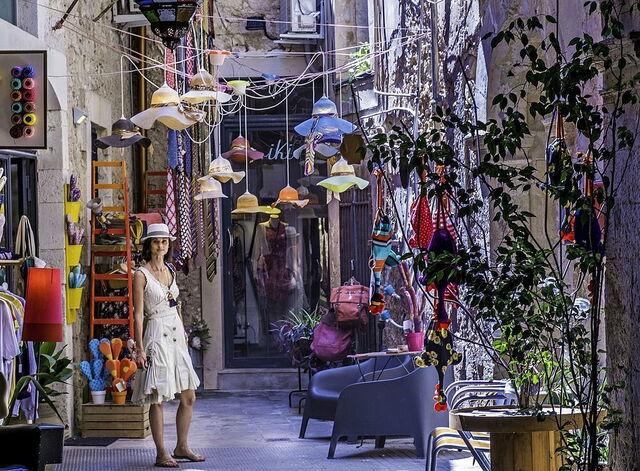
As mentioned, however, wandering around is the main occupation of a visit to Ortygia. Explore the alleys and side-streets, eat out on the waterfront, grab coffee in a piazza, visit the churches and archaeological sites and take in the atmosphere of this stunning gem. Just find a vacation rental in Sicily and come explore the town for yourself.
Photo credits
picture 1: Alfonso Messina Siracusa / CC BY-SA 4.0;
picture 2: Falk Petro / CC BY 2.0;
picture 3: Fred Bigio / CC BY 2.0
picture 1: Alfonso Messina Siracusa / CC BY-SA 4.0;
picture 2: Falk Petro / CC BY 2.0;
picture 3: Fred Bigio / CC BY 2.0