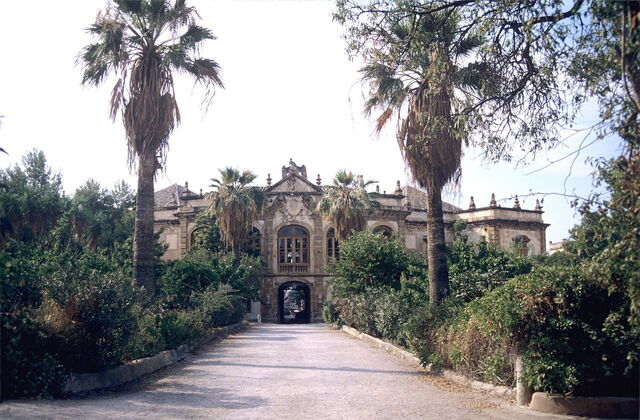
Italy has no shortage of architectural gems. In fact, for architecture lovers, as the birthplace of the Renaissance, it is a must-see destination. However, while many of these buildings and monuments may be stunning and majestic feats of architecture, there are also many that are oddities with strange quirks and unusual histories and origins. These stranger works may still be beautiful but there is no denying that they are unusual, which is only one more reason that they are fascinating and to love them! In the town of Bagheria, not far from Palermo, there is a palace that is both beautiful and very odd, indeed. If you have found a vacation rental in Palermo, be sure to drop by and visit it for yourself, as it has to be seen to be truly appreciated.
Villa Palagonia is an 18th century architectural gem and palace famous for its “monsters”, the grotesque sculptures of beasts and figures that decorate the garden and surrounding wall.
Villa Palagonia is an 18th century architectural gem and palace famous for its “monsters”, the grotesque sculptures of beasts and figures that decorate the garden and surrounding wall.
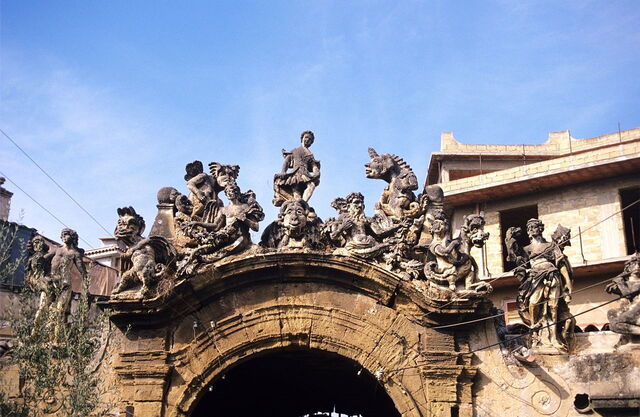
Considered a fine example of the so-called Sicilian baroque, the building was overseen by architect Tommaso Napoli. The monsters were created from 1749 by Francesco Ferdinando II Gravina, Prince of Palagonia. The prince is said to have been a disturbed individual and the most freakish statues are said to have been his caricature of the many lovers of his promiscuous wife. Among the statues there are dragons, soldiers, hunchbacks and freaks of nature.
While the villa is currently open to the public, it is in a dilapidated state of repair and there are only a few internal rooms open, all of which are empty and without furniture. However, the wall decorations and paintings of the era remains such as the paintings of the trials of Hercules line an oval-shaped vestibule and the colorful birds and portraits of the various lords of Europe in the “Gallery of Mirrors”, which was once the ballroom.
While the villa is currently open to the public, it is in a dilapidated state of repair and there are only a few internal rooms open, all of which are empty and without furniture. However, the wall decorations and paintings of the era remains such as the paintings of the trials of Hercules line an oval-shaped vestibule and the colorful birds and portraits of the various lords of Europe in the “Gallery of Mirrors”, which was once the ballroom.
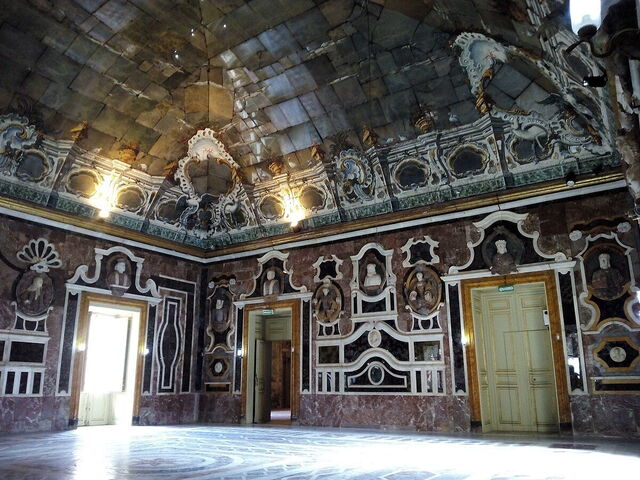
This room is also home to an incredible ceiling of antique mirrors, the corners of which also feature paintings majestic birds and coats of arms.
This strange building became well-known in the era of the “Grand Tour” and attracted visitors such as Goethe, Alexander Dumas and later, surrealist artists such as Andre Breton. While it is less well-known now, it is still an incredible and famous building with endless nooks and crannies to be explored. For those visiting Sicily, it is well worth seeking out.
This strange building became well-known in the era of the “Grand Tour” and attracted visitors such as Goethe, Alexander Dumas and later, surrealist artists such as Andre Breton. While it is less well-known now, it is still an incredible and famous building with endless nooks and crannies to be explored. For those visiting Sicily, it is well worth seeking out.
Photo credits
Picture 1: Jpbazard Jean-Pierre Bazard / CC BY-SA 3.0;
Picture 2: Jpbazard Jean-Pierre Bazard / CC BY-SA 3.0;
Picture 3: Lasterketak / CC BY-SA 4.0
Picture 1: Jpbazard Jean-Pierre Bazard / CC BY-SA 3.0;
Picture 2: Jpbazard Jean-Pierre Bazard / CC BY-SA 3.0;
Picture 3: Lasterketak / CC BY-SA 4.0