The Arab-Norman architecture of Palermo is a collection of buildings and monuments with design and decorative features that came about from an intertwining of cultures. Sicily's history is a tale of a long succession of rulers from a variety of places and cultures. It was particularly influenced by the Islamic conquest from 827 to 1091 and Norman rule from 1071 to 1194.
These various influences and cultures have all left their mark on the island and it is especially evident in the art and architecture of Sicily. The city of Palermo is dotted with buildings that are fine examples, incredibly fine examples, in fact, of Arab-Norman architecture.
These buildings are so admired that they were declared an official UNESCO site in 2015.
These various influences and cultures have all left their mark on the island and it is especially evident in the art and architecture of Sicily. The city of Palermo is dotted with buildings that are fine examples, incredibly fine examples, in fact, of Arab-Norman architecture.
These buildings are so admired that they were declared an official UNESCO site in 2015.
Just find a luxury villa in Sicily and you can explore these architectural gems for yourself, while you enjoy the many other attractions and attractive points of this wonderful island.
The Cuba is a rather lovely example if an Arab-Norman palace in Palermo and is one of the nine examples of Arab-Norman architecture in Palermo that are part of the UNESCO-awarded “Arab-Norman Palermo and the Cathedral Churches of Cefalú and Monreale”.
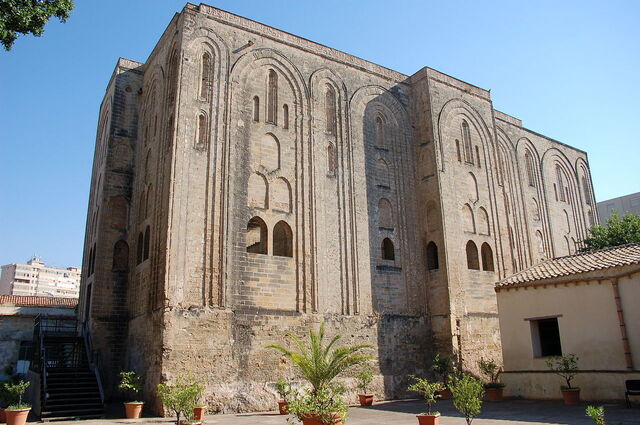
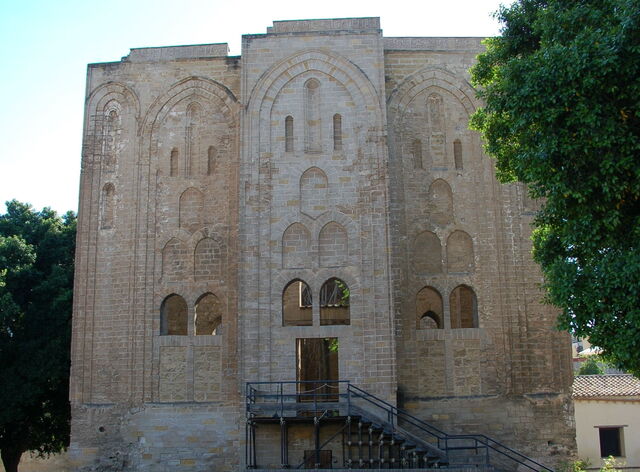
Built in 1180 by William II of Sicily, as a casino or pleasure building in his Royal Park, it was at least partially designed and built by Arab artisans remaining in Sicily. Roughly cube-shaped, it has walls with blind arcades, small windows and niches on the exterior and has characteristically Arabic architectural features such as muqarnas - a type of ornamented vaulting that is akin to the appearance of honeycomb - on the interior.
The Cuba is a rather lovely example if an Arab-Norman palace in Palermo and is one of the nine examples of Arab-Norman architecture in Palermo that are part of the UNESCO-awarded “Arab-Norman Palermo and the Cathedral Churches of Cefalú and Monreale”.
Built in 1180 by William II of Sicily, as a casino or pleasure building in his Royal Park, it was at least partially designed and built by Arab artisans remaining in Sicily. Roughly cube-shaped, it has walls with blind arcades, small windows and niches on the exterior and has characteristically Arabic architectural features such as muqarnas - a type of ornamented vaulting that is akin to the appearance of honeycomb - on the interior.
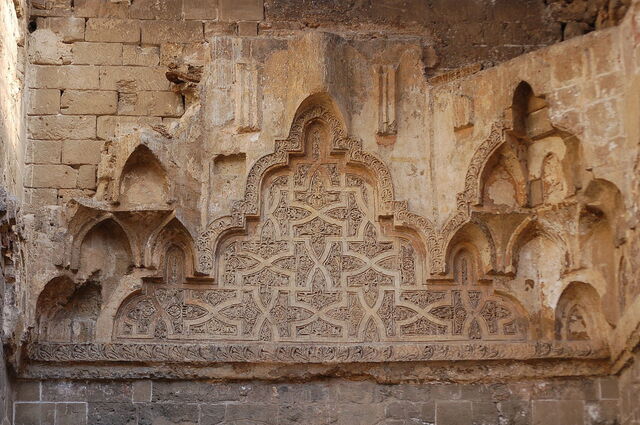
The etymology of the name “Cuba” itself is uncertain: it might come from the Latin “cupa” (barrel) or the Arab “qubba” (dome), “kubba” (deposit) or “Ka’aba” (cube). However, we do know for sure that it is part of the same architectonic complex of the Zisa and was built by William II in his great Royal Park, as his personal recreation pavilion. It was then annexed to a barracks during the Bourbon rule and was made into a leper's colony in the 16th century. Little of its original opulent purpose remains, bar the intricate architectural details and beautiful design of the building. The artificial lake that surrounded and verdant gardens and pavilions are now long gone. Known as “Genoardo”, a word of Arabic origin meaning “Paradise on Earth”, the architectural masterpiece remains, even if the “paradise” does not.
Photo credits
picture 1: Sebastian Fischer / CC BY-SA 3.0;
picture 2: Sebastian Fischer / CC BY-SA 3.0;
picture 3: Sebastian Fischer / CC BY-SA 3.0
picture 1: Sebastian Fischer / CC BY-SA 3.0;
picture 2: Sebastian Fischer / CC BY-SA 3.0;
picture 3: Sebastian Fischer / CC BY-SA 3.0