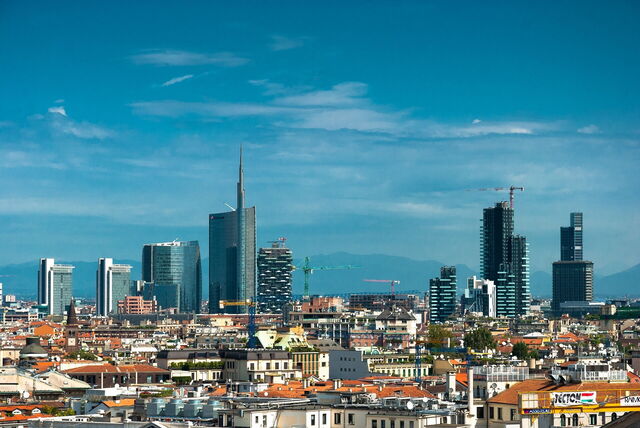
In the final post in this series, we are rounding up more of Milan's architectural masterpieces. While the city may have been put on the map internationally by its fashion, it has much more to offer any visitor when it comes to art and culture and, in particular, architecture.
Just find a vacation rental in Milan and follow this guide and you will find some of the city's best architectural gems that, handily, are also some of its major tourist attractions.
6. Villa Belgiojoso Bonaparte
The Villa Belgiojoso Bonaparte, also known as the Villa Reale and the Villa Comunale, was originally built for Count Ludovico Barbiano di Belgiojoso in the 18th century.
Just find a vacation rental in Milan and follow this guide and you will find some of the city's best architectural gems that, handily, are also some of its major tourist attractions.
6. Villa Belgiojoso Bonaparte
The Villa Belgiojoso Bonaparte, also known as the Villa Reale and the Villa Comunale, was originally built for Count Ludovico Barbiano di Belgiojoso in the 18th century.
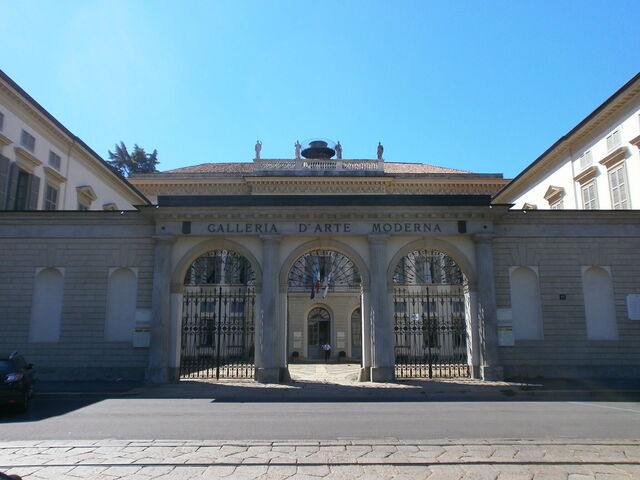
Today it is owned by the Comune of Milan and houses the Gallery of Modern Art. Built between 1790 and 1796 in the neoclassical style under Leopoldo Pollack, the palace is one of the finest examples of 18th century architecture in the city.
Napoleon briefly lived there with Josephine, then it was purchased by Austria as a summer residence for the viceroy, before coming under the possession of the local Milanese government in 1920. A year later, in 1921, it was made into the Gallery of Modern Art and houses an important collection of 19th-century art that grew from private donations from prominent families in Milan.
The surrounding garden was also designed by Pollack at the end of the eighteenth century and is quite the attraction in its own right, however, as it is dedicated to children, adults must be accompanied by a child under twelve years old to enter!
Napoleon briefly lived there with Josephine, then it was purchased by Austria as a summer residence for the viceroy, before coming under the possession of the local Milanese government in 1920. A year later, in 1921, it was made into the Gallery of Modern Art and houses an important collection of 19th-century art that grew from private donations from prominent families in Milan.
The surrounding garden was also designed by Pollack at the end of the eighteenth century and is quite the attraction in its own right, however, as it is dedicated to children, adults must be accompanied by a child under twelve years old to enter!
7. Milano Centrale
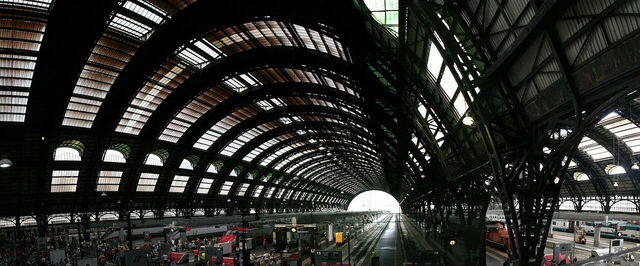
If you are spending time in the city but are planning on taking day trips elsewhere, you might have naturally found yourself at Milano Centrale, the city's main train station, anyway. If not, you should at least walk past because it is quite the beauty. One of the main railway stations in Europe, it was officially inaugurated in 1931 to replace the old central station, which no longer exists and could not handle the increased traffic facing the city's train lines. Designed by architect Ulisse Stacchini, it was modelled after Union Station in Washington and is a blend of many different styles, especially Liberty and Art Deco. Massive and adorned with numerous sculptures, it is an awe-inspiring building.
There are, of course, many more buildings that could be mentioned but these posts will act as a good guide to tipping your toe into the architectural heritage of Milan.
If you are spending time in the city but are planning on taking day trips elsewhere, you might have naturally found yourself at Milano Centrale, the city's main train station, anyway. If not, you should at least walk past because it is quite the beauty. One of the main railway stations in Europe, it was officially inaugurated in 1931 to replace the old central station, which no longer exists and could not handle the increased traffic facing the city's train lines. Designed by architect Ulisse Stacchini, it was modelled after Union Station in Washington and is a blend of many different styles, especially Liberty and Art Deco. Massive and adorned with numerous sculptures, it is an awe-inspiring building.
There are, of course, many more buildings that could be mentioned but these posts will act as a good guide to tipping your toe into the architectural heritage of Milan.
Photo credits
picture 2: Stefano Stabile / CC BY-SA 3.0
picture 2: Stefano Stabile / CC BY-SA 3.0