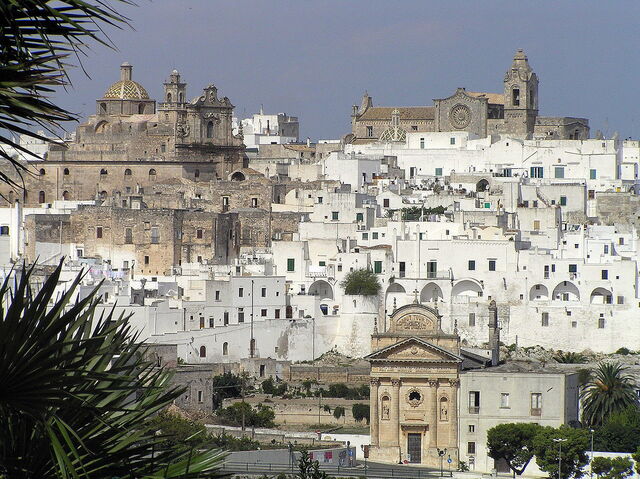
Ostuni is a famously beautiful town in Italy though it is not so well-known internationally and is a bit of a hidden gem. Its key selling point is its architecture, which is a charming example of typical Mediterranean style. The lush green of the surrounding area frames the impressive image made by the rows and rows of whitewashed houses, staircases, roads, alleys and arches that rise up into the sky and look down onto the blue sea below.
This is further accented by the Medieval remnants, in the form of churches and convents, that can be found at every corner of the town.
With its rich history and such a wonderful seaside location, Ostuni has plenty of cultural attractions to see and outdoor pursuits and watersports to enjoy so you'll never be stuck for something to see or do or photo opportunities in this beautiful town.
This is further accented by the Medieval remnants, in the form of churches and convents, that can be found at every corner of the town.
With its rich history and such a wonderful seaside location, Ostuni has plenty of cultural attractions to see and outdoor pursuits and watersports to enjoy so you'll never be stuck for something to see or do or photo opportunities in this beautiful town.
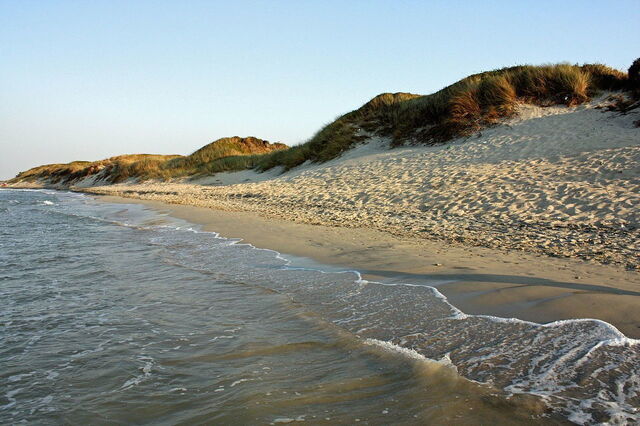
If you are interested in visiting Ostuni, just find a luxury villa in Puglia and you can explore its winding streets, take in the stunning views and discover its secrets for yourself!
Ostuni was founded by an indigenous tribe in 600 BC and was variously under the control of the Romans, Ostrogoths, Lombards, Saracens, Byzantines, Normans, the Hohenstaufen, Angevins, Aragonese and Bourbons, over the centuries. While each left their mark on the city, its appearance as it stands today can mostly be attributed to developments in the 15th to the 18th centuries. The famous white-washed buildings of the city that have earned it its nickname of “La Città Bianca” (The White City), originated from a Medieval practice to try and brighten up the tiny streets and alleys of the town. However, in the 17th century their role became more important as a means of counteracting outbreaks of plague.
Ostuni was founded by an indigenous tribe in 600 BC and was variously under the control of the Romans, Ostrogoths, Lombards, Saracens, Byzantines, Normans, the Hohenstaufen, Angevins, Aragonese and Bourbons, over the centuries. While each left their mark on the city, its appearance as it stands today can mostly be attributed to developments in the 15th to the 18th centuries. The famous white-washed buildings of the city that have earned it its nickname of “La Città Bianca” (The White City), originated from a Medieval practice to try and brighten up the tiny streets and alleys of the town. However, in the 17th century their role became more important as a means of counteracting outbreaks of plague.
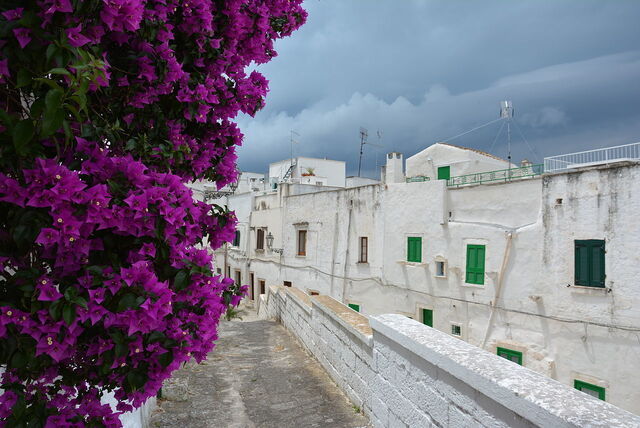
Highlights of the city have to be wandering those same Medieval streets, exploring the back streets, passages and steps and discovering little surprises and delights; a visit to the imposing Archbishop’s palace; the 15th century cathedral with its curvaceous, symmetrical façade and rose window; enjoying the views of the surrounding countryside and the Adriatic Sea; the Cavalcata di Sant’Oronzo festival, a celebration of the town’s patron saint that takes place between the 24th-27th August and involves a knightly, costumed procession on horseback on the penultimate day; and the Sagra dei Vecchi Tempi on the 15th of August that allows you to try some of the area’s traditional dishes.
If you're looking for a distinctive, fascinating and lesser-known part of Italy to explore this summer, this is the perfect town for you!
If you're looking for a distinctive, fascinating and lesser-known part of Italy to explore this summer, this is the perfect town for you!
Photo credits
Picture 1: Dronkitmaster / CC BY-SA 3.0;
Picture 2: Carlo Pelagalli / CC BY-SA 3.0;
Picture 3: Mentnafunangann / CC BY-SA 4.0
Picture 1: Dronkitmaster / CC BY-SA 3.0;
Picture 2: Carlo Pelagalli / CC BY-SA 3.0;
Picture 3: Mentnafunangann / CC BY-SA 4.0