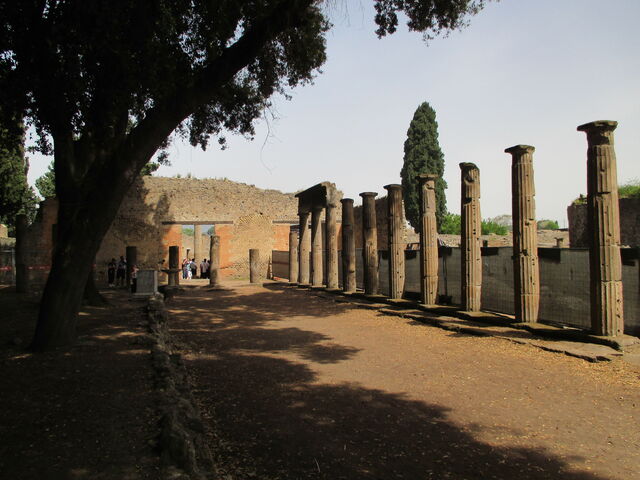
The story of Pompeii is somewhat familiar to most. It was one of two flourishing Roman towns (the other being Herculaneum) at the foot of the volcano, Vesuvius, when it erupted in 79AD. The towns were covered in ash and lava and buried under the earth until they were properly excavated from the 18th century onwards. From that moment onwards, Pompeii, in particular, became the object of international fascination as it saw the preservation of life thousands of years ago. Not only was the architecture, art and lifestyle of the time frozen but an instant in time remained paused for later generations to view and learn from. Unique and captivating, the two sites continue to draw millions each year.
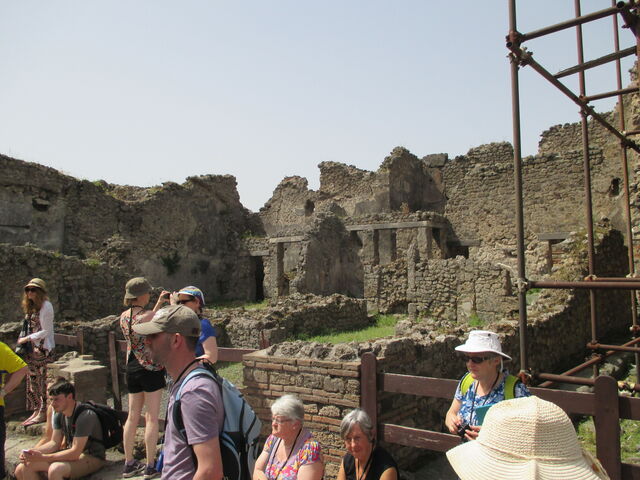
Well worth the lines and chaos at least once in a life-time, just find a holiday villa in Naples and take a day trip out to Pompeii.
Pompeii was founded in the 6th century BC and eventually came under the domain of the Romans in 89BC. That same year, it was elevated to the status of Colonia Cornelia Venera Pompeiana. The Romans also developed the town, constructing fine public buildings in stone, such as the amphitheatre, forum baths, odeon and theatre. At the end of the 1st century BC, an aqueduct was built to bring the waters of the Samo River to the town, where they were distributed by a sophisticated supply system to houses, baths, and public fountains.
Pompeii was founded in the 6th century BC and eventually came under the domain of the Romans in 89BC. That same year, it was elevated to the status of Colonia Cornelia Venera Pompeiana. The Romans also developed the town, constructing fine public buildings in stone, such as the amphitheatre, forum baths, odeon and theatre. At the end of the 1st century BC, an aqueduct was built to bring the waters of the Samo River to the town, where they were distributed by a sophisticated supply system to houses, baths, and public fountains.
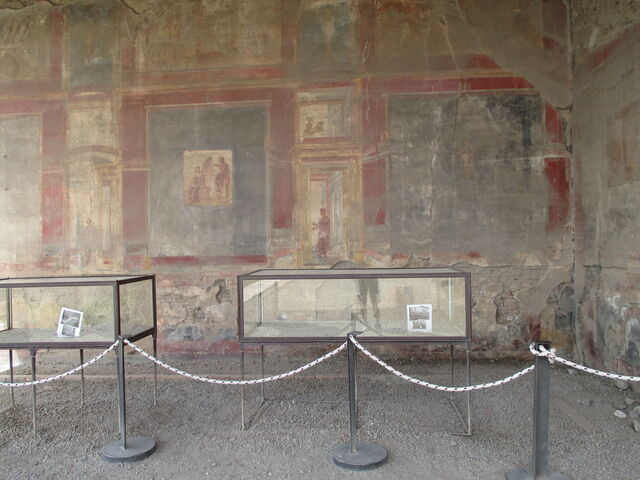
Pompeii was a commercial town and a centre of an important wine-producing district. It was sophisticated and prosperous.
The town presents a wide variety of buildings which have been preserved and can be explored today; shops, large villas, modest housing, temples, taverns, baths, an arena, public latrines, a market hall schools, water towers, a basilica and, even, brothels. A feature which is particularly well-known and a popular part of tours of the town is the graffiti on its walls. There is everything from slogans to do with an imminent election, to personal insults and mementos and more explicit messages.
Pompeii was rediscovered in 1755AD. From then on, it became an essential stopping point on the fashionable Grand Tour which greatly enhanced its international reputation. It was also on the itineraries of famous visitors as Goethe, Mozart and Stendhal who recorded their experiences at the site. Really, though, it must be experienced to be understood. Eerie, fascinating and beautiful in its crumbling state, it's a highlight of any visit to the Campania area.
The town presents a wide variety of buildings which have been preserved and can be explored today; shops, large villas, modest housing, temples, taverns, baths, an arena, public latrines, a market hall schools, water towers, a basilica and, even, brothels. A feature which is particularly well-known and a popular part of tours of the town is the graffiti on its walls. There is everything from slogans to do with an imminent election, to personal insults and mementos and more explicit messages.
Pompeii was rediscovered in 1755AD. From then on, it became an essential stopping point on the fashionable Grand Tour which greatly enhanced its international reputation. It was also on the itineraries of famous visitors as Goethe, Mozart and Stendhal who recorded their experiences at the site. Really, though, it must be experienced to be understood. Eerie, fascinating and beautiful in its crumbling state, it's a highlight of any visit to the Campania area.