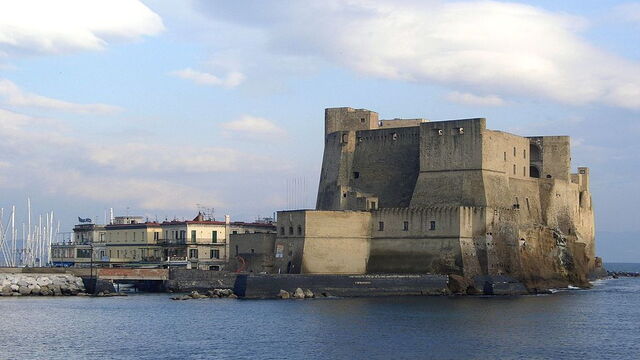
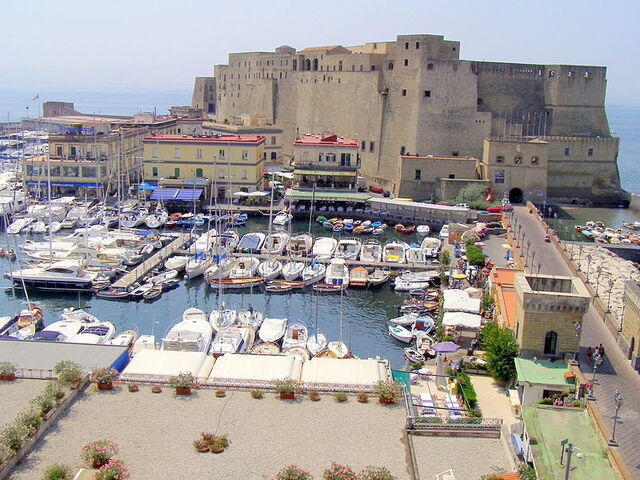
Castel dell' Ovo is a castle which stands on the tiny island of Megaride in Naples. The picturesque castle is steeped in myth and legend with stories about sirens and great Roman poets such as Virgil dotting its history. It also has far-reaching origins going back to this early period. With such a rich heritage, such a stunning location and such an immediately striking appearance, the Castel dell'Ovo is the perfect place to spend an afternoon in Naples, wandering its grounds, hearing its stories and admiring its architecture and the views its ramparts offer.
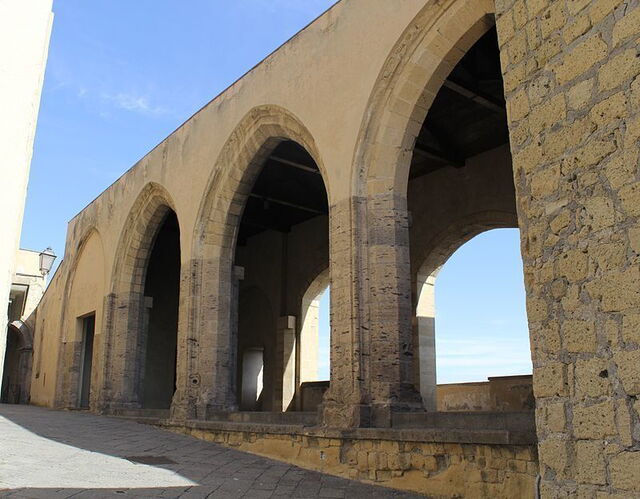
All you need to do is find a vacation rental in Naples and pay it a visit for yourself.
According to one legend, the name of the castle (literally meaning, “Castle of the Egg”) derives from an egg that was hidden in the dungeons by Virgil. The egg is in many contexts (from pre-Christian examples to, even, the popular use of the "Easter egg") a symbol of life, resurrection and hope. Thus, a broken egg stands for spiritual death. The story goes that Virgil took the first egg laid by a hen, put it in a glass amphora, and placed that in a finely wrought metal cage suspended from a beam braced against the walls of a small secret chamber built especially for that purpose within the castle. As long as the egg remained intact, the city was safe.
According to one legend, the name of the castle (literally meaning, “Castle of the Egg”) derives from an egg that was hidden in the dungeons by Virgil. The egg is in many contexts (from pre-Christian examples to, even, the popular use of the "Easter egg") a symbol of life, resurrection and hope. Thus, a broken egg stands for spiritual death. The story goes that Virgil took the first egg laid by a hen, put it in a glass amphora, and placed that in a finely wrought metal cage suspended from a beam braced against the walls of a small secret chamber built especially for that purpose within the castle. As long as the egg remained intact, the city was safe.
This bizarre legend became so firmly rooted in the popular mindset that at least once in the Middle Ages, a Neapolitan monarch had to go out and assure the people that the egg had not broken and that Naples was, in fact, safe. Virgil, therefore, joined the list of guardians of the city, including the original siren, Parthenope and the Christian protector, St. Januarius.
However, if an egg were placed in the castle, it could not have been in its original incarnation as it is recorded that in the time of Queen Joan I of Naples, a devastating storm wrecked much of the Castel dell'Ovo, even destroying the natural arch that joined the two parts of the island.
Joan then had to assure the people that it had all happened because the egg had broken, but that she had personally gone through the same magic ritual as Virgil, putting a second protective egg in place in the same spot.
Throughout history, there are further records of instances of monarchs promising an egg was in place beneath the castle but today the halls of Castel dell’Ovo are merely home to temporary art exhibits and events like Vitigno Italia, a wine trade fair and show. Egg or no egg, it's a worthwhile spot to visit in Campania.
However, if an egg were placed in the castle, it could not have been in its original incarnation as it is recorded that in the time of Queen Joan I of Naples, a devastating storm wrecked much of the Castel dell'Ovo, even destroying the natural arch that joined the two parts of the island.
Joan then had to assure the people that it had all happened because the egg had broken, but that she had personally gone through the same magic ritual as Virgil, putting a second protective egg in place in the same spot.
Throughout history, there are further records of instances of monarchs promising an egg was in place beneath the castle but today the halls of Castel dell’Ovo are merely home to temporary art exhibits and events like Vitigno Italia, a wine trade fair and show. Egg or no egg, it's a worthwhile spot to visit in Campania.
Photo credits
picture 1: currybet / CC BY 2.0;
picture 2: Richard Nevell / CC BY-SA 2.0;
picture 3: Producer / CC BY 2.5
picture 1: currybet / CC BY 2.0;
picture 2: Richard Nevell / CC BY-SA 2.0;
picture 3: Producer / CC BY 2.5