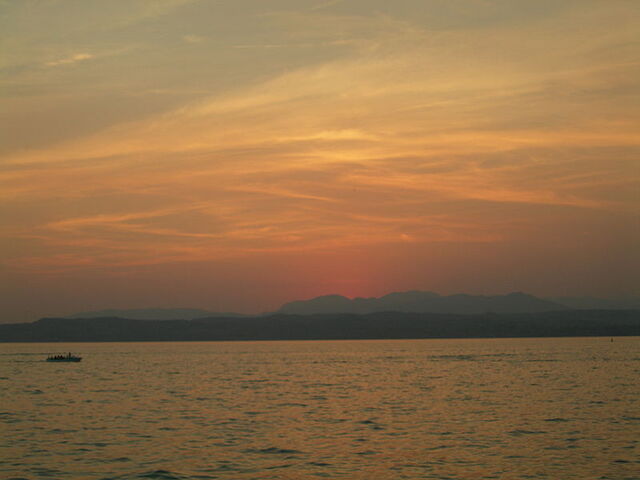
Sirmione is a small town with a population of less than 9,000 which is located on Lake Garda. However, despite its relatively small size, it is jam-packed with things to see and do, history and architectural gems. The area has been settled since the Stone Age when it was probably home to fishermen who lived in houses on stilts on the banks of the lake.
One such settlement found nearby at Lugana Vecchia is part of the collection of such sites across a variety of countries in the vicinity of the Alps, including Slovenia, Austria, Germany, France and Switzerland and is now considered a UNESCO World Heritage Site.
One such settlement found nearby at Lugana Vecchia is part of the collection of such sites across a variety of countries in the vicinity of the Alps, including Slovenia, Austria, Germany, France and Switzerland and is now considered a UNESCO World Heritage Site.
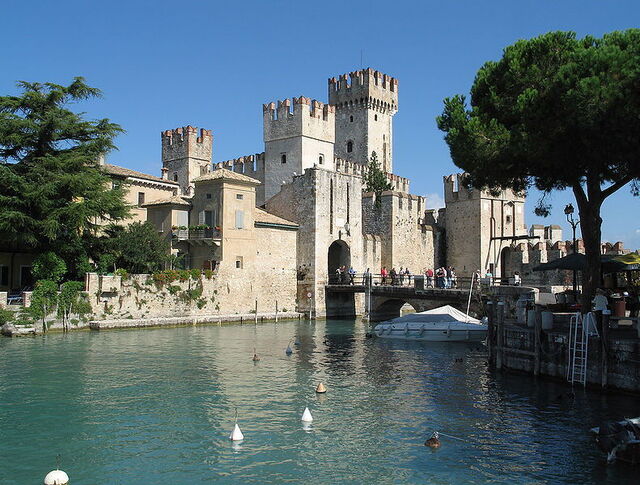
The strategic location of the town near the south-eastern portion of the lake meant that it was of military importance over the centuries and was, as a result, intimately connected to power struggles and shifts throughout Italy's history. This led to the construction of some of the most interesting architectural features in the town such as Scaliger Castle, a rare example of a medieval fortified port built in three stages between 1277 and 1405 and with stunning views over the town and lake.
It has also been one of the most popular areas to visit since Roman times, when wealthy families came to the resort area from Verona.
It has also been one of the most popular areas to visit since Roman times, when wealthy families came to the resort area from Verona.
Who can blame them when the beauty of the lake and the amenities of the town are considered? Why not see it for yourself and find a villa on the Garda Lake?
One such amenity is the Terme di Catullo which uses the water that naturally bubbles out of Lake Garda near the northern shoreline of the Sirmione peninsula. At the end of the 19th century, a diver managed to insert a metal pipe into a rock near the springs and bring the water to land for the first time since the Romans (who were very fond of using it in their bathhouses). The water is at a decidedly pleasant temperature of 70°C and is used for health treatments in the two thermal baths and spas which exist in Sirmione.
In addition, one can visit the beautiful churches of the town which come from a range of periods and, therefore, reflect a variety of architectural styles. These are Sant'Anna della Rocca, San Pietro in Mavino and Santa Maria Maggiore and all three are also exceptionally beautifully decorated inside with frescoes adorning the walls and ceilings.
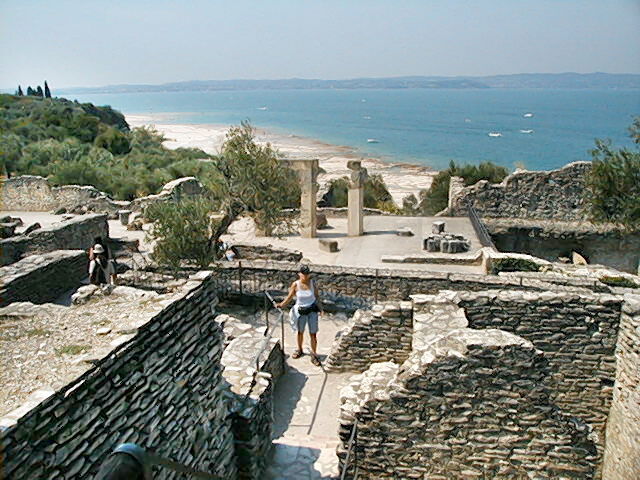
One of the most distinctive sights in the area is the "Grotto of Catullus". Neither a grotto nor home to Roman poet Catullus, it was initially called a "grotto" due to the run-down walls. The villa itself is a three-story building from around 150AD though recent research suggest that it may have actually been one of the original bathhouses in the area. For a small entry fee, the site and an accompanying museum can be visited.
With so much to see and do, what are you waiting for? Plus, you'll never want for something to do in the wider Lake Garda area!
One such amenity is the Terme di Catullo which uses the water that naturally bubbles out of Lake Garda near the northern shoreline of the Sirmione peninsula. At the end of the 19th century, a diver managed to insert a metal pipe into a rock near the springs and bring the water to land for the first time since the Romans (who were very fond of using it in their bathhouses). The water is at a decidedly pleasant temperature of 70°C and is used for health treatments in the two thermal baths and spas which exist in Sirmione.
In addition, one can visit the beautiful churches of the town which come from a range of periods and, therefore, reflect a variety of architectural styles. These are Sant'Anna della Rocca, San Pietro in Mavino and Santa Maria Maggiore and all three are also exceptionally beautifully decorated inside with frescoes adorning the walls and ceilings.
One of the most distinctive sights in the area is the "Grotto of Catullus". Neither a grotto nor home to Roman poet Catullus, it was initially called a "grotto" due to the run-down walls. The villa itself is a three-story building from around 150AD though recent research suggest that it may have actually been one of the original bathhouses in the area. For a small entry fee, the site and an accompanying museum can be visited.
With so much to see and do, what are you waiting for? Plus, you'll never want for something to do in the wider Lake Garda area!
Photo credits
picture 1: Nicolaesse / CC BY 2.5;
picture 2: Manfred Heyde / CC BY-SA 3.0;
picture 3: de:Benutzer:Kabelsalat / CC BY-SA 3.0;
picture 1: Nicolaesse / CC BY 2.5;
picture 2: Manfred Heyde / CC BY-SA 3.0;
picture 3: de:Benutzer:Kabelsalat / CC BY-SA 3.0;