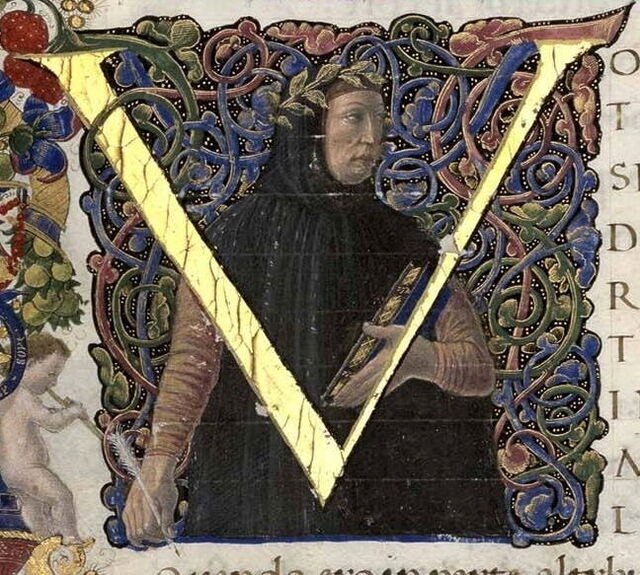
Across the Venetian Lagoon, past the Dolomites and beyond the towers of Venice, distinct conical hills are visible. Called the Euganean Hills, they are 81 long-dead volcanoes clustered together, above rolling green farmlands dotted with little monasteries and grand Palladian villas. At their centre is the beautiful village of Arquà Petrarca, Padua. Named for the great Italian poet Francesco Petrarch, after his death, it was also where he retired and one can only imagine how inspiring such spectacularly beautiful surrounds could have only been to the poet.
If you want to follow the same literary pilgrimage as countless others (Lord Byron among them), find a holiday rental in Padua and make the journey to Petrarch's final resting place.
If you want to follow the same literary pilgrimage as countless others (Lord Byron among them), find a holiday rental in Padua and make the journey to Petrarch's final resting place.
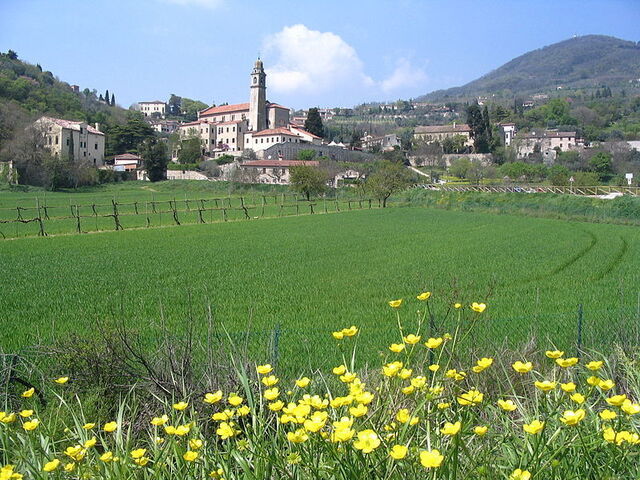
Petrarch was so taken with Arquà, after a life of travelling restlessly, that, in 1369, he had a wealthy friend to buy him land just outside the village and built a house with a vineyard and orchard.
The poet took it upon himself to oversee the creation of his home and designed a dominicale in the lower portion of the building for the use of himself and his family. The upper part of the building, the rustic, was created for use by the servants.
He also took care in the creation of an office and a garden, spending most of his days in his vegetable garden.
The poet took it upon himself to oversee the creation of his home and designed a dominicale in the lower portion of the building for the use of himself and his family. The upper part of the building, the rustic, was created for use by the servants.
He also took care in the creation of an office and a garden, spending most of his days in his vegetable garden.
After his death, in 1374, the building and its library were inherited by his beloved son in law, Francescuolo da Brossura, who had lived there with Petrarch and his daughter, Francesca. The property then passed to the Giustiniani family and then again to other Venetian families before it was finally given to the Municipality of Padua in 1875 by Cardinal Silvestri. His only condition being that no one else could ever live there.
By the fifteenth century, it was already attracting visitors and fans. In the mid-sixteenth century, the then owner, Paolo Valdezocco, made alterations to the building in order to create a museum to Petrarch.
However, the most significant addition he made to the residence was the series of celebratory frescoes depicting the life and the content of some of the works of the poet. Other, conservative, changes were made between 1906 and 1985 by the Municipality of Padua, to make the site accessible to the growing number of visitors.
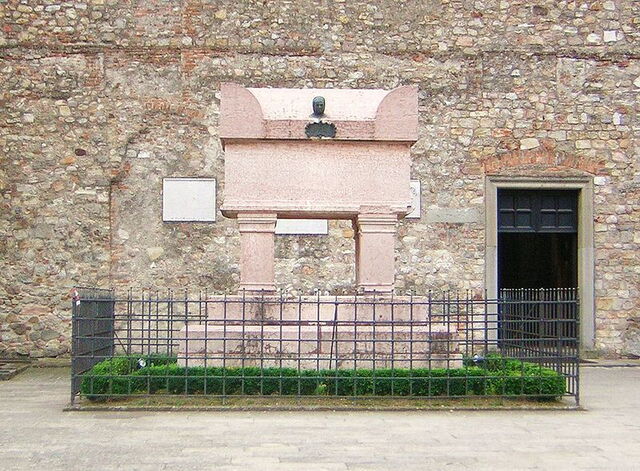
If you visit now, you ring a bell outside the heavy wrought-iron gate and wait for the custodian to let you in. You'll then be able to see the pretty little garden, interiors, frescoes and Petrarch's study where he died, aged 70, still at work on a manuscript. The views from this space will bring any fan closer to his work and make you understand the poet a little better. In the main square, Petrarch's tomb stands regally in front of the church.
Any true admirers of his work will make a point to visit the town named after Petrarch, where he closed his life, in Veneto.
By the fifteenth century, it was already attracting visitors and fans. In the mid-sixteenth century, the then owner, Paolo Valdezocco, made alterations to the building in order to create a museum to Petrarch.
However, the most significant addition he made to the residence was the series of celebratory frescoes depicting the life and the content of some of the works of the poet. Other, conservative, changes were made between 1906 and 1985 by the Municipality of Padua, to make the site accessible to the growing number of visitors.
If you visit now, you ring a bell outside the heavy wrought-iron gate and wait for the custodian to let you in. You'll then be able to see the pretty little garden, interiors, frescoes and Petrarch's study where he died, aged 70, still at work on a manuscript. The views from this space will bring any fan closer to his work and make you understand the poet a little better. In the main square, Petrarch's tomb stands regally in front of the church.
Any true admirers of his work will make a point to visit the town named after Petrarch, where he closed his life, in Veneto.
Photo credits
picture 2: Patrice78500 / CC BY-SA 3.0;
picture 3: RanZag / CC BY-SA 3.0
picture 2: Patrice78500 / CC BY-SA 3.0;
picture 3: RanZag / CC BY-SA 3.0