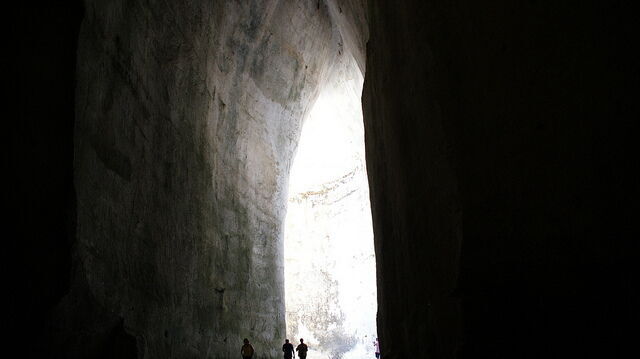
In the idyllic beauty of Sicily, you will find Syracuse, a historic and lush city and province. There are plenty of wonderful things to do to pass your time on a trip to Syracuse but one of the most distinctive sights in the area is the Ear of Dionysius, or Orecchio di Dionisio, a very particular cave set within the Stone Quarry of Paradise, or Latomia di Paradiso. The cave was named by the great, and troubled, Italian Master, Caravaggio and given due to the lingering presence of a ghost.
An astounding natural sight with historic resonance and which is said to be one of the most haunted places on earth, it holds interest on multiple levels. Find a villa with a swimming pool in Syracuse and visit this fascinating spot for yourself!
The ghostly past of the quarry originally goes back to 413 BC when, during the disastrous Sicilian phase of the Peloponnesian War, thousands of Athenian prisoners died of disease and starvation in its pits. It was later renamed a "paradise" due to the lush landscaping which is nourished by abundant surface water and makes the area seem unearthly in its beauty.
The ghostly past of the quarry originally goes back to 413 BC when, during the disastrous Sicilian phase of the Peloponnesian War, thousands of Athenian prisoners died of disease and starvation in its pits. It was later renamed a "paradise" due to the lush landscaping which is nourished by abundant surface water and makes the area seem unearthly in its beauty.
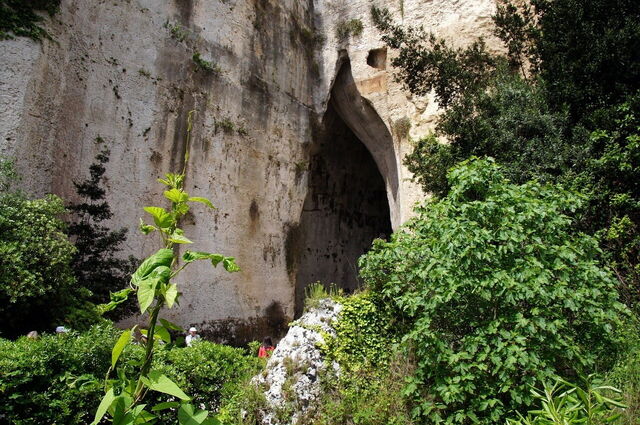
This beauty, however, does little to banish the spooky atmosphere once you spend a few moments there. The Ear of Dionysius, in particular, is what lends the most haunting contribution to the area with the ability to bend sounds into frightening, unrecognisable things.
Discovering the uneasy atmosphere of the cave when he visited while fleeing from a charge of murder in Rome in 1609, Michelangelo Merisi da Caravaggio (or just Caravaggio), named it and this name stuck right into present use. The winding passage and external appearance of the cave reminded him of a human ear.
Thus, he aptly got the “Orecchio” part of the name. “Dionysius” comes from the legendary Tyrant of Syracuse whose presence Caravaggio felt lingered in the spot. According to legend, Dionysius used the cave as a prison as he could spy on his captives from an opening at the top of the cave and even whispers from the cavern below would be easily audible. Another tale says that the sadistic emperor took satisfaction in hearing the amplified screams of his prisoners as they were tortured.
Visitors who venture inside are unnerved by these same acoustic effects which allows for the amplification and transformation of whispers into wails and tearing sounds into loud bangs. It's easy to understand why Caravaggio might have though the place was haunted. However, to make your own mind up as to whether or not it is haunted, you'll have to stop by on your next visit to Sicily.
Discovering the uneasy atmosphere of the cave when he visited while fleeing from a charge of murder in Rome in 1609, Michelangelo Merisi da Caravaggio (or just Caravaggio), named it and this name stuck right into present use. The winding passage and external appearance of the cave reminded him of a human ear.
Thus, he aptly got the “Orecchio” part of the name. “Dionysius” comes from the legendary Tyrant of Syracuse whose presence Caravaggio felt lingered in the spot. According to legend, Dionysius used the cave as a prison as he could spy on his captives from an opening at the top of the cave and even whispers from the cavern below would be easily audible. Another tale says that the sadistic emperor took satisfaction in hearing the amplified screams of his prisoners as they were tortured.
Visitors who venture inside are unnerved by these same acoustic effects which allows for the amplification and transformation of whispers into wails and tearing sounds into loud bangs. It's easy to understand why Caravaggio might have though the place was haunted. However, to make your own mind up as to whether or not it is haunted, you'll have to stop by on your next visit to Sicily.
Photo credits
picture 1: Mark Ireland / CC BY 2.0
picture 1: Mark Ireland / CC BY 2.0