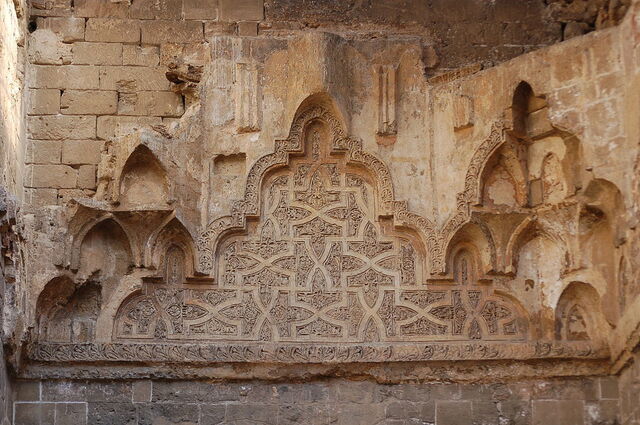
The Arab-Norman architecture of Palermo is a collection of buildings and monuments with design and decorative features that came about from an intertwining of cultures. Sicily's history is a tale of a long succession of rulers from a variety of places and cultures. Sicily was especially influenced by the Islamic conquest (827-1091) of lands in what is now Italy and then by how this combined with Norman rule (1071-1194). Alongside Byzantine influences, this led to a multi-ethnic culture that saw Western and Islamic cultures combined in art and architecture among other areas. Find a luxury villa in Sicily and you could see it for yourself!
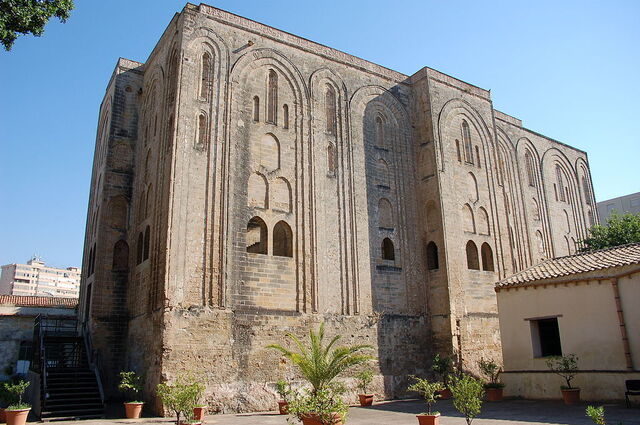
The Cuba, a Sicilian palace in Palermo, is one of the eight examples of Arab-Norman architecture in Palermo which have been put forward as a potential UNESCO Heritage Site. Built in 1180 by William II of Sicily, as a casino or pleasure building in his Royal Park, it was at least partially designed and built by Arab artisans remaining in Sicily. Roughly cube-shaped, it has walls with blind arcades, small windows and niches on the exterior and has characteristically Arabic architectural features such as muqarnas - a type of ornamented vaulting that is akin to the appearance of honeycomb - on the interior.
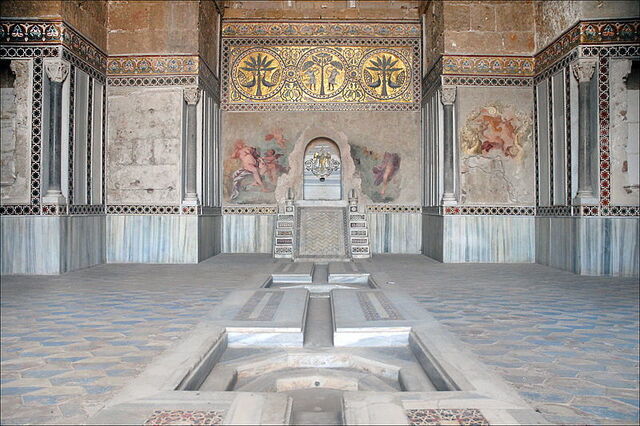
Another good example of the Arab-Norman architecture of Palermo is the Zisa, a twelfth century castle built for William I of Sicily and was completed by his aforementioned son.
It is part of the same hunting resort complex on which the Cuba was later built.
The name comes from an Arabic word meaning “dear” or “splendid” and the building even features the word in Naskh script on the entrance.
It is part of the same hunting resort complex on which the Cuba was later built.
The name comes from an Arabic word meaning “dear” or “splendid” and the building even features the word in Naskh script on the entrance.
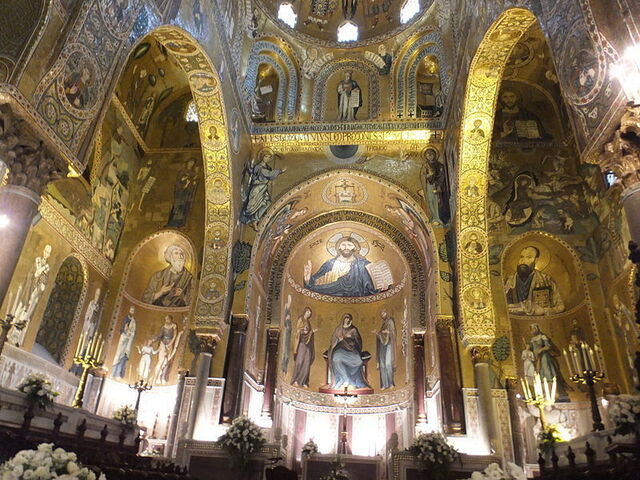
A final, extraordinary example, is the Cappella Palatina, or Palatine Chapel. The Royal Chapel at the Palazzo Reale, it was built in 1132 for Roger II of Sicily on the remains of an earlier church. A glittering gem inside, it sees the perfect marriage of Western, Byzantine and Islamic influences.
Byzantine-inspired mosaics work perfectly with Saracen arches on the interior and the whole effect is a harmonious, stunning whole.
Any trip to Sicily will reveal the multi-cultural roots of its past and would be enhanced by visiting such examples of its wonderful hybrid architecture that will surely become UNESCO sites.
Byzantine-inspired mosaics work perfectly with Saracen arches on the interior and the whole effect is a harmonious, stunning whole.
Any trip to Sicily will reveal the multi-cultural roots of its past and would be enhanced by visiting such examples of its wonderful hybrid architecture that will surely become UNESCO sites.
Photo credits
picture 1: Sebastian Fischer / CC BY-SA 3.0;
picture 2: Sebastian Fischer / CC BY-SA 3.0;
picture 3: dalbera / CC BY 2.0;
picture 4: Fintan Corrigan / CC BY-SA 4.0
picture 1: Sebastian Fischer / CC BY-SA 3.0;
picture 2: Sebastian Fischer / CC BY-SA 3.0;
picture 3: dalbera / CC BY 2.0;
#/media/File:La_salle_de_la_fontaine_de_la_Zisa_(Palerme)_(6889178512).jpg)
picture 4: Fintan Corrigan / CC BY-SA 4.0
