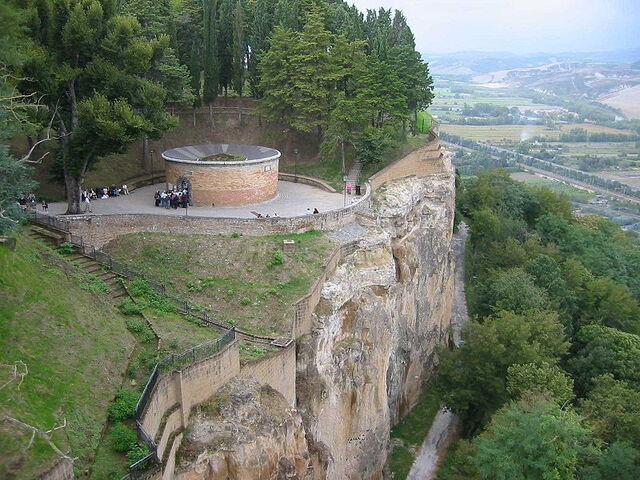
St Patrick conjures images of Ireland to mind, not Italy. However, a particularly fascinating monument in Orvieto, Umbria has the British saint's name attached to it. St Patrick's Well, originally called The Fortress Well – which would be a far more suitable title to use – is an exceptionally deep well which was built to provide water to Orvieto during times of siege.
Built on the edge of a cliff in the early 1500s and a masterpiece of hydraulic engineering, it is now a popular tourist site.
The structure is so ingrained into Italian mindsets that to call someone generous you can say that they have pockets as deep as St Patrick's Well. If you want to see this astounding and iconic structure for yourself, find a luxury villa in Umbria and make the descent into the depths of the earth.
Built on the edge of a cliff in the early 1500s and a masterpiece of hydraulic engineering, it is now a popular tourist site.
The structure is so ingrained into Italian mindsets that to call someone generous you can say that they have pockets as deep as St Patrick's Well. If you want to see this astounding and iconic structure for yourself, find a luxury villa in Umbria and make the descent into the depths of the earth.
At the beginning of the sixteenth century, Pope Clement VII sought refuge in the city of Orvierto while Rome was being sacked.
He was, however, somewhat concerned that there was not enough water to last through a siege. Clement then commissioned the 170 ft deep well.
Antonio da Sangallo the Younger was commissioned to design the well in 1527 and construction was preceded by hydrogeological research in order to find the most suitable site for the structure.
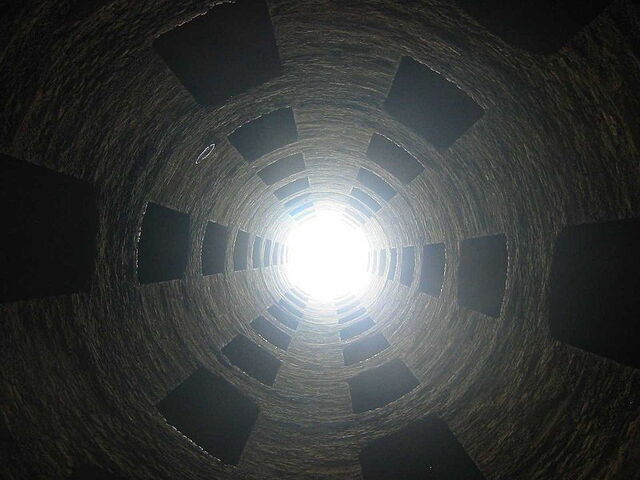
Measuring 43 ft in diameter, it is built with 70 windows that open onto a set of two spiral staircases which wrap around the centre in a double helix pattern.
He was, however, somewhat concerned that there was not enough water to last through a siege. Clement then commissioned the 170 ft deep well.
Antonio da Sangallo the Younger was commissioned to design the well in 1527 and construction was preceded by hydrogeological research in order to find the most suitable site for the structure.
Measuring 43 ft in diameter, it is built with 70 windows that open onto a set of two spiral staircases which wrap around the centre in a double helix pattern.
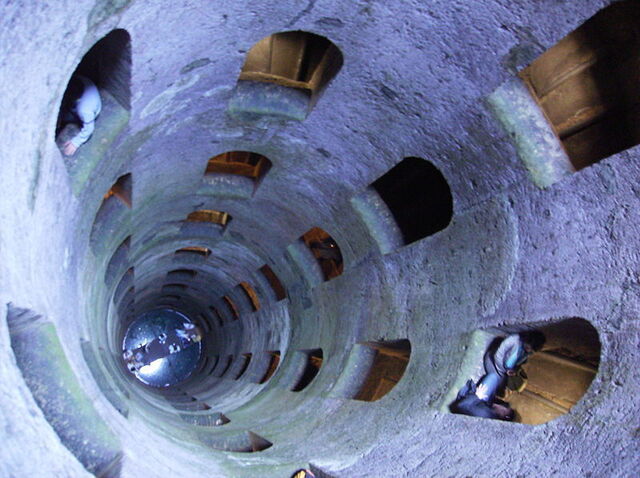
This allowed for pack animals to simultaneously travel upwards and down into the well to gather water, without meeting.
The well took so long to complete, almost ten years that by the time water was finally struck, the pope has passed away.
The original name of The Fortress Well is due to its proximity to the Albornoz fortress. It was later renamed after Saint Patrick's Purgatory in County Donegal, Ireland, a pilgrimage site which is alternately recorded as a cave, pit or well. Legend tells that it was an entrance to Purgatory and that Patrick used it to retire and pray.
In the second half of the eighteenth century, the Italian site is thought to have come to be used in a similar way similar to the Irish well. The unbelieving were made to venture to the bottom of the cave and could gain remission of sins and access to heaven.
Today, you might want to make the journey downwards out of curiosity, rather than as a way to save your soul. Even if you don't have such grand intentions in mind, the trip is well-worth it, should you find yourself in Umbria.
The well took so long to complete, almost ten years that by the time water was finally struck, the pope has passed away.
The original name of The Fortress Well is due to its proximity to the Albornoz fortress. It was later renamed after Saint Patrick's Purgatory in County Donegal, Ireland, a pilgrimage site which is alternately recorded as a cave, pit or well. Legend tells that it was an entrance to Purgatory and that Patrick used it to retire and pray.
In the second half of the eighteenth century, the Italian site is thought to have come to be used in a similar way similar to the Irish well. The unbelieving were made to venture to the bottom of the cave and could gain remission of sins and access to heaven.
Today, you might want to make the journey downwards out of curiosity, rather than as a way to save your soul. Even if you don't have such grand intentions in mind, the trip is well-worth it, should you find yourself in Umbria.
Photo credits
picture 1: Fantasy / CC BY-SA 3.0;
picture 2: Fantasy / CC BY-SA 3.0;
picture 3: Abxbay / CC0 1.0
picture 1: Fantasy / CC BY-SA 3.0;
picture 2: Fantasy / CC BY-SA 3.0;
picture 3: Abxbay / CC0 1.0