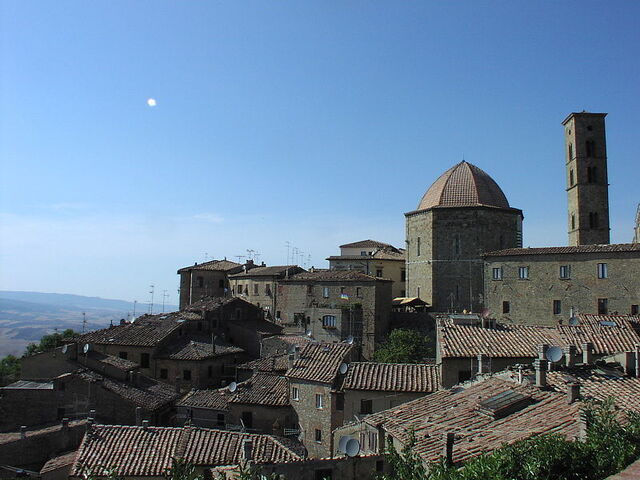
The working of alabaster is a long-standing tradition in the picturesque town of Volterra in Pisa,Tuscany. This unique craft has been a profitable commodity for Volterra since the time of the Etruscans who used alabaster to make urns and in creating capitals, tabernacles, vases and other works of art. Luckily, there are plentiful natural deposits of the precious stone in the area. Furthermore, the alabaster of the area is considered one of the most precious around the world given its particular compactness, transparency, veins and hardness. The extraction, carving and trade of alabaster has brought fame and prosperity to the town throughout its history, allowing it to become one of the most beautiful towns in the entire region.
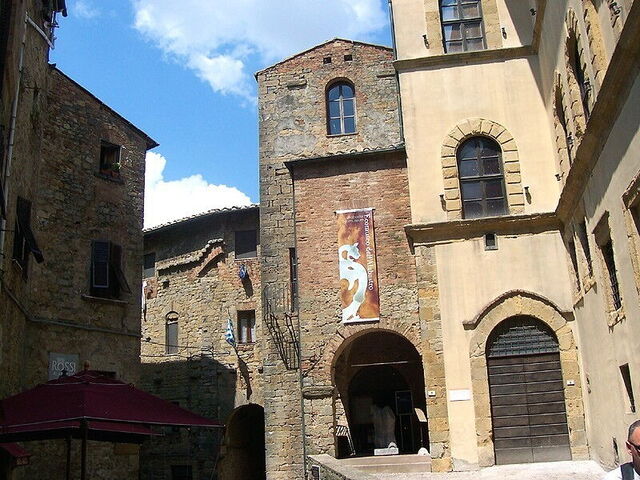
Find a luxury villa in Volterra and become entranced by the alabaster beauty of the town.
The best place in the town to start off, if you're interested in its alabaster heritage, is the Museum of Alabaster, or Alabaster Ecomuseum, in Volterra which displays over 300 alabaster art works made between the 18th and 19th centuries. A private collection built up for over thirty years by the Bruchi family, it is housed in a former Augustinian convent from the 17th century.
It displays paintings, antiques and ceramics and also includes beautiful female busts by Giuseppe Bessi.
The best place in the town to start off, if you're interested in its alabaster heritage, is the Museum of Alabaster, or Alabaster Ecomuseum, in Volterra which displays over 300 alabaster art works made between the 18th and 19th centuries. A private collection built up for over thirty years by the Bruchi family, it is housed in a former Augustinian convent from the 17th century.
It displays paintings, antiques and ceramics and also includes beautiful female busts by Giuseppe Bessi.
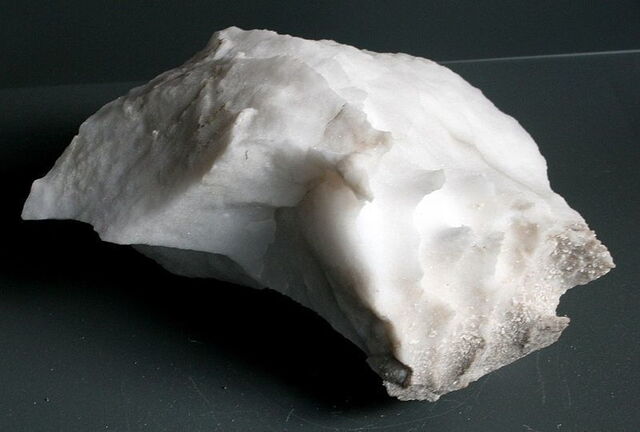
It also tells the story of the ancient craft, specific to Volterra, from the excavation of the stone to its production and commercialisation and documents the alabaster craft from the Etruscan era to the present day. Divided in three sections, the first section showcases working techniques, the second chronicles the history of alabaster production, and the third displays objects made in alabaster by contemporary artisans. This is enhanced by visiting an old workshop in the Minucci Medieval tower, recently acquired from the Pagni family by the Town of Volterra, which further illustrates the history and practice of alabaster carving in Volterra.
A visit to the Ecomuseum should be complemented by excursions to further alabaster collections in the area such as those of the Guarnacci Museum and Palazzo Viti. The Guarnacci Museum houses a rich display of alabaster carving dating back to the Etruscan era while Palazzo Viti is a historical home which contains a large collection of antique alabaster artefacts.
The best part of all of this, however, is that the town still produces alabaster souvenirs so you can not only learn about the history and beauty of alabaster in Volterra but buy a piece of it to bring home. Be sure to stop by on your next trip to Tuscany.
A visit to the Ecomuseum should be complemented by excursions to further alabaster collections in the area such as those of the Guarnacci Museum and Palazzo Viti. The Guarnacci Museum houses a rich display of alabaster carving dating back to the Etruscan era while Palazzo Viti is a historical home which contains a large collection of antique alabaster artefacts.
The best part of all of this, however, is that the town still produces alabaster souvenirs so you can not only learn about the history and beauty of alabaster in Volterra but buy a piece of it to bring home. Be sure to stop by on your next trip to Tuscany.
Photo credits
picture 1: tiseb / CC BY 2.0;
picture 2: Geobia / CC BY-SA 3.0;
picture 3: Lanzi / CC BY-SA 3.0
picture 1: tiseb / CC BY 2.0;
picture 2: Geobia / CC BY-SA 3.0;
picture 3: Lanzi / CC BY-SA 3.0